



How to Start a PCD Pharma Franchise Business in India
How to Select the Right Pharma Products for Your PCD Franchise Business
October 8, 2026PCD Pharma Franchise Investment in India
October 8, 2026Quick Answer
To start a PCD Pharma Franchise in India: choose a registered pharmaceutical company, select your target product range and territory, obtain necessary Drug License and GST registrations, sign the franchise agreement, and begin local marketing and distribution.
A PCD Pharma Franchise continues to be one of the easiest ways for getting into the Indian Pharmaceutical Market. There is no requirement to establish a factory, employ people, or invest money. All that is required from the owner is the process, which includes obtaining necessary licences, finding a manufacturer, and making sure that there is a plan in place. Not following this process and rushing into anything is how most new franchise owners get into trouble.
This guide takes a closer look at how it is done step-by-step.
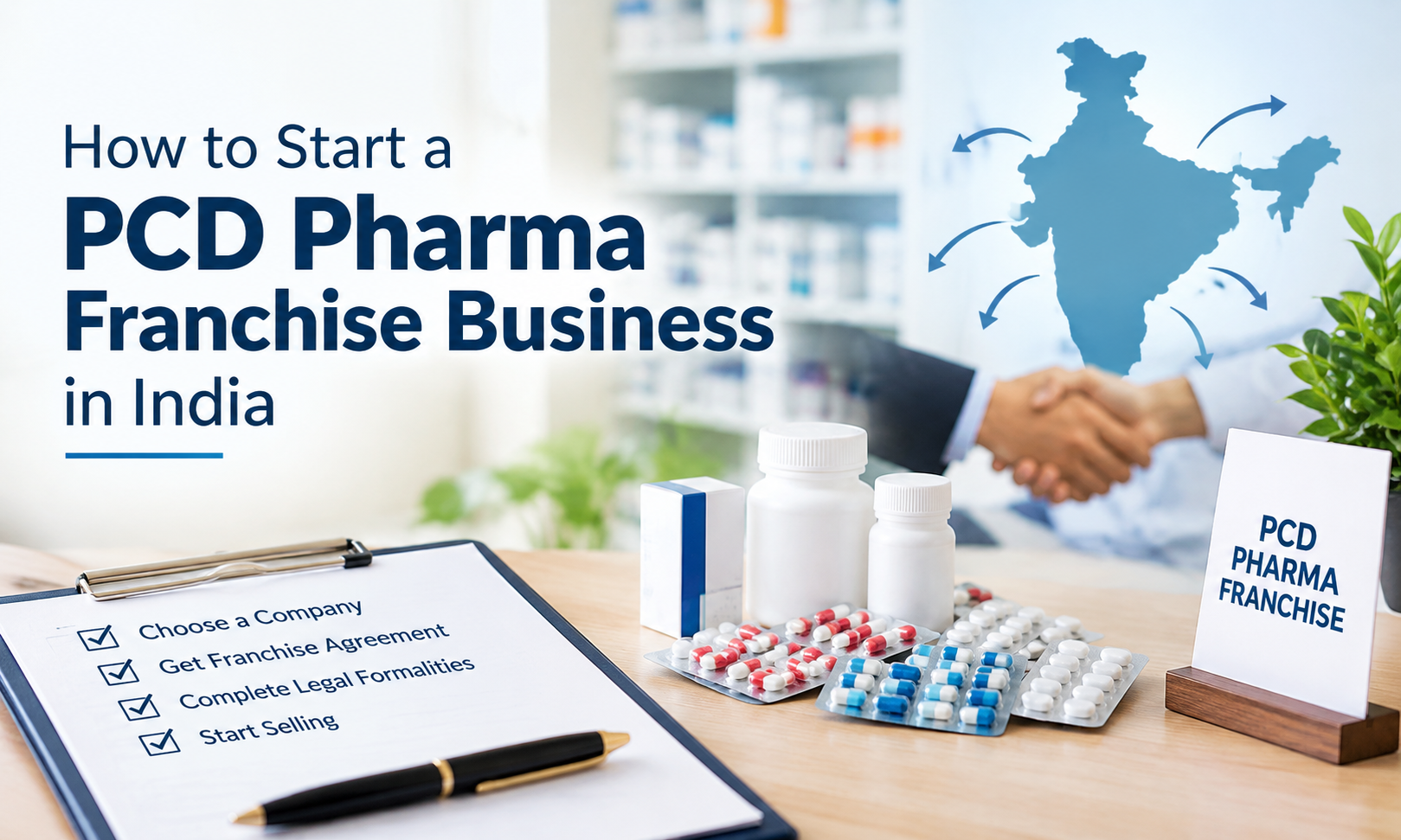
Step 1: Understand the PCD Franchise Model Properly
Before visiting any company for a job interview, it would be wise to know precisely what a PCD franchise entails, as opposed to other pharma business models.
What Does PCD Stand For?
PCD stands for Propaganda cum Distribution. You get authorisation from a pharmaceutical company to market and distribute its branded medicines in a certain territory, typically in a district or a part of a state. The medicines are sold at distributor prices, and a margin is made by selling them to doctors, chemists, and hospitals.
Difference Between PCD And Third-Party Manufacturing
While in a PCD franchise, you market and distribute the medicines of the company’s existing products, third-party manufacturing sees you make and distribute your own brand while the manufacturer makes them for you. The former requires less capital and is quick to begin, hence the reason why it is the most popular choice among beginners.
Step 2: Decide Your Territory and Product Focus
Your early decisions here shape almost everything that follows, from which company fits your needs to how quickly you can start generating sales.
Choosing Your Territory
Pick a territory you understand well, ideally one where you already have relationships with doctors, chemists, or hospitals, since local market knowledge speeds up your first few months significantly. Make sure the area isn’t already saturated with a franchise partner for the same company’s products.
Choosing a Product Segment
Decide early whether you want a general range or a focused segment such as cardiac, diabetic, derma, gynae, or paediatric products. A focused range lets you build deep relationships with specific specialists, while a general range gives you broader reach across more types of prescribers. Reviewing a company’s full product catalogue before deciding helps match your choice to realistic demand in your territory.
Step 3: Shortlist and Evaluate Franchise Companies
However, not all PCD firms provide the same quality or terms and thus, some level of caution is required instead of blindly choosing the first firm that happens to appear on the radar.
Check Manufacturing Capability
Find firms that have manufacturing capability on their own in accordance with WHO-GMP, ISO, and GMP certification because directly manufactured products are better than those outsourced by other firms in terms of quality, pricing, and uniformity.
Evaluate Scope of Products and Monopoly Terms
Examine the scope of the product line and ensure that the company is really able to give monopoly rights to you in the concerned territory in written form.
Refer to Some of the Existing Franchise Partners
Contact some of the current franchisees about the delivery capability, payment terms, and handling of problems. This one point is worth much more than all the brochures put together.
Step 4: Arrange the Required Documentation
Certain documents should be in place before any reputable franchise company agrees to sign an agreement with you, which means you should get these done in advance.
Drug License
The drug license is one of the most basic requirements for dealing with medicines in India. It needs to be valid and granted by your State Drug Control Authority and may include a pharmacist in its registration.
GST Registration
Getting the GST number is mandatory in order to create proper invoices and have an input tax credit. Companies will hardly agree to a deal without it.
Other Required Documents
Make sure you have your PAN card, address proof, and banking information on hand, as apart from these two licenses, this is what you need for other companies.
Step 5: Finalise the Franchise Agreement
The agreement is where every verbal promise needs to be documented clearly, so read it carefully rather than treating it as a formality.
Key Terms to Review
Check the agreement covers your territory definition, monopoly conditions, product pricing, minimum order requirements, payment terms, and return policy for near-expiry stock. Ambiguity in any of these areas tends to cause disputes later.
Don’t Rush the Signing
A reputable company will give you time to review the agreement and answer your questions. Pressure to sign quickly, or vague answers about terms, is a warning sign worth taking seriously.
Step 6: Plan Your Initial Investment and Stock Order
Realistic budgeting now avoids any future cash flow issues when you start running.
Estimating Your Initial Cost
The amount you will spend initially usually includes your first stock purchase and promotional materials. The costs differ greatly depending on the minimum order value that the company requires from you and the product mix you choose, so make sure to get all the details in writing.
Avoid Over-ordering Initially
Start off by making a realistic order, instead of overspending on stock without even knowing which one is most profitable for your doctor base.
Step 7: Set Up Your Operations
With the agreement signed and your first order placed, a few practical steps help you launch smoothly.
Storage and Handling
Arrange appropriate storage for your stock, including temperature control if your range includes products that need it, and keep your inventory organised for efficient dispatch to chemists and stockists.
Building Your Distribution Network
Identify the chemists, stockists, and hospitals in your territory you’ll supply to, and establish clear ordering and delivery processes with them from the start.
Step 8: Start Marketing to Doctors and Building Prescriptions
This is where growth occurs for the actual business, and it is something that must be done on a regular basis, and not just during the launch process.
Doctor Appointments and Building Relationships
Informative appointments to key doctors and specialists, utilising the marketing materials provided by your franchise company, are the way in which your product line becomes prescriptions.
Utilising the Company’s Resources Properly
Take full advantage of visual presentations, product information materials, and product samples offered through your franchise company, because these materials are tailored to doctor meetings.
Common Mistakes First-Time Franchise Owners Make
Some common themes lead to much of the early problems experienced by franchise partners, and which should be carefully considered.
Picking Only Based on Margin
While margin might matter to you, there are situations where high-margin products are not necessarily a good idea when purchased from companies that don’t have good control mechanisms. Consider margin along with the quality of support and service.
Skipping the Verification Process
Failing to verify licences, checking out the company facility, or failing to contact other partners is perhaps one of the most common mistakes, and can be quite costly to correct.
Marketing Will Take More Effort Than Expected
While the franchise will provide the product and the brand name, prescriptions will need continued engagement by the doctor. Don’t expect passivity once the initial sale has been made.
Final Thoughts
Starting a PCD pharma franchise in India is genuinely achievable without large capital or manufacturing infrastructure, but success depends on doing the groundwork properly: choosing the right territory and product focus, verifying your franchise company thoroughly, getting your documentation and agreement right, and then committing to consistent marketing once you’ve launched.
If you’re ready to explore your options, review the PCD pharma franchise opportunities at Bidu Biotech, an ISO, WHO-GMP, and GMP-certified company established in 2009, browse the full product range across allopathic, nutraceutical, and Ayurvedic segments, or get in touch to discuss monopoly-based franchise opportunities in your territory.
Get Product List
Contact Us